
- total exposure
- 1 h 20 min
- frames in the FITS archive
- 16
- imaging nights
- 2
- imaging period: 24 Aug — 15 Mar
- 2020–2021
Visibility and signal
Exposure by filter
- L1 h 20 min · 16 frames
Share of each filter in the total exposure
- Narrowband filters
- 0%needs a dark sky
- Typical frame
- 300 s16 frames in total
- In one night
- 40 minaveraged over 2 nights
Altitude above the horizon tonight
Observing log2 nights · 16 frames
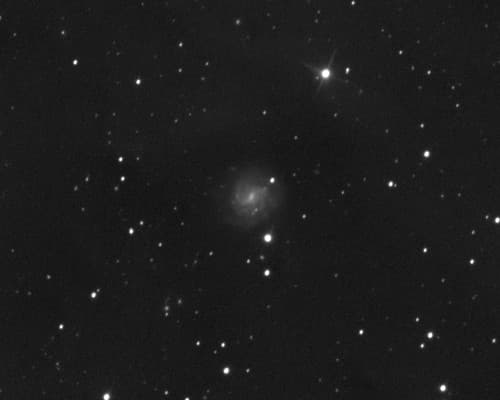
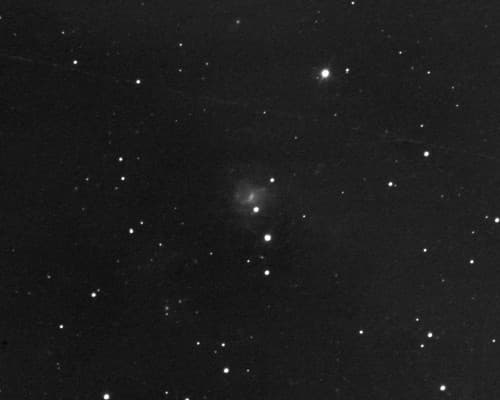
Photos of the objectEach photo is a separate processing; parameters and equipment are on the photo page
About the object
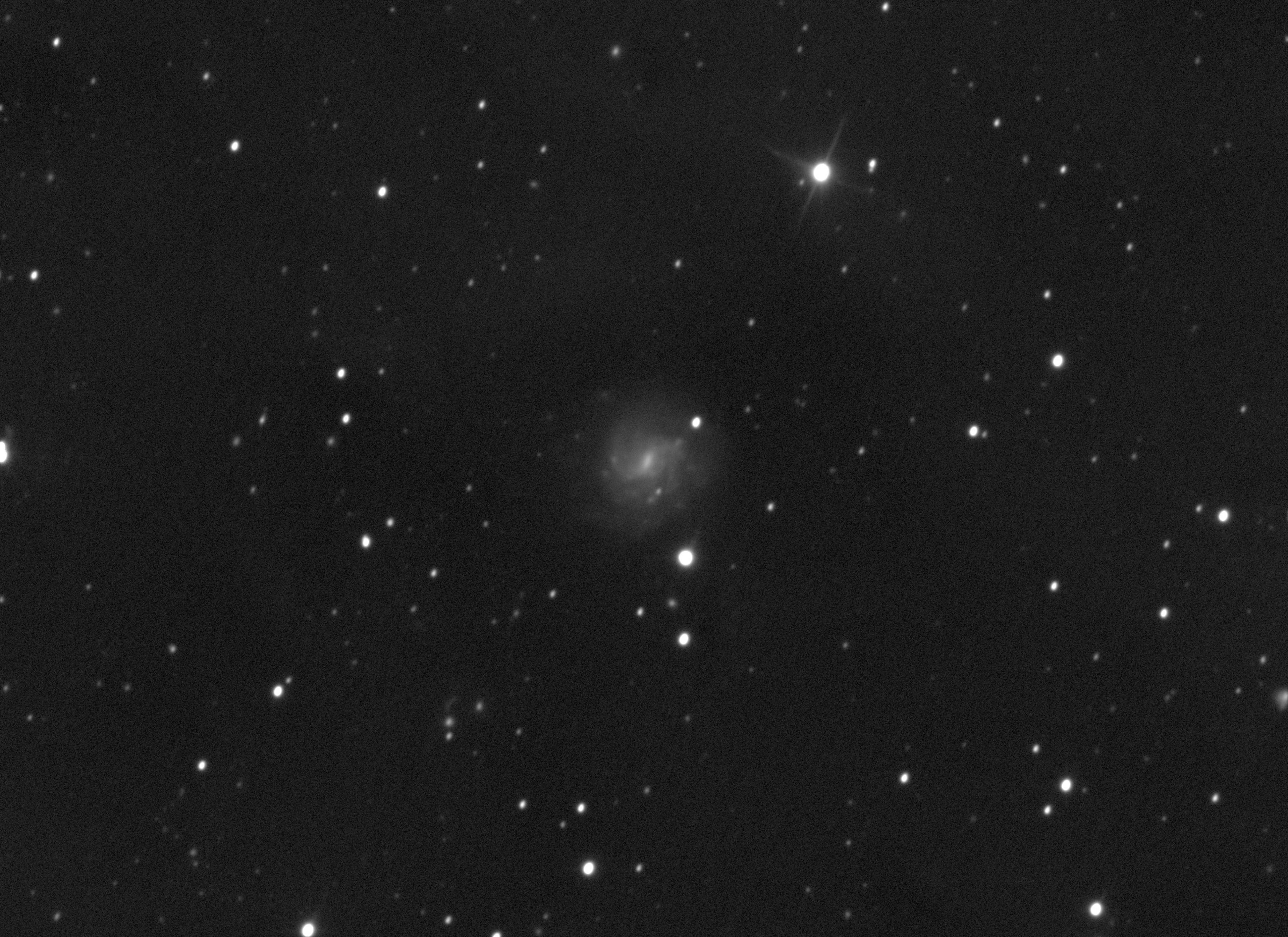
Supernova SN2020rcq is a stellar outburst that occurred more than 50 million years ago in the galaxy UGC 6930, which is part of the M109 group of galaxies and is located in the constellation Ursa Major. Due to the enormous distance, the light from the event reached Earth only in late summer 2020.
The supernova was discovered on August 9, 2020 by the Zwicky Transient Facility observatory located in California. The 1.2-meter Palomar Survey Telescope was used for observations. This discovery was part of a large-scale project to search for and study stellar outbursts.
We managed to photograph SN2020rcq on August 24, 2020, when its brightness was estimated at 11.8m. Seven months later, on March 16, 2021, we recorded this galaxy again. By that time, the brightness of the supernova had decreased to ~17.4m, indicating a gradual fading of the object's luminosity.
SN2020rcq belongs to a class of events that play an important role in the evolution of the Universe. Such explosions enrich interstellar space with heavy elements formed during the process of stellar death. Observations of supernovae also help to clarify distances to galaxies and study the dynamics of star systems.
Such discoveries demonstrate how powerful and significant cosmic processes are, and inspire further research into our Universe.