
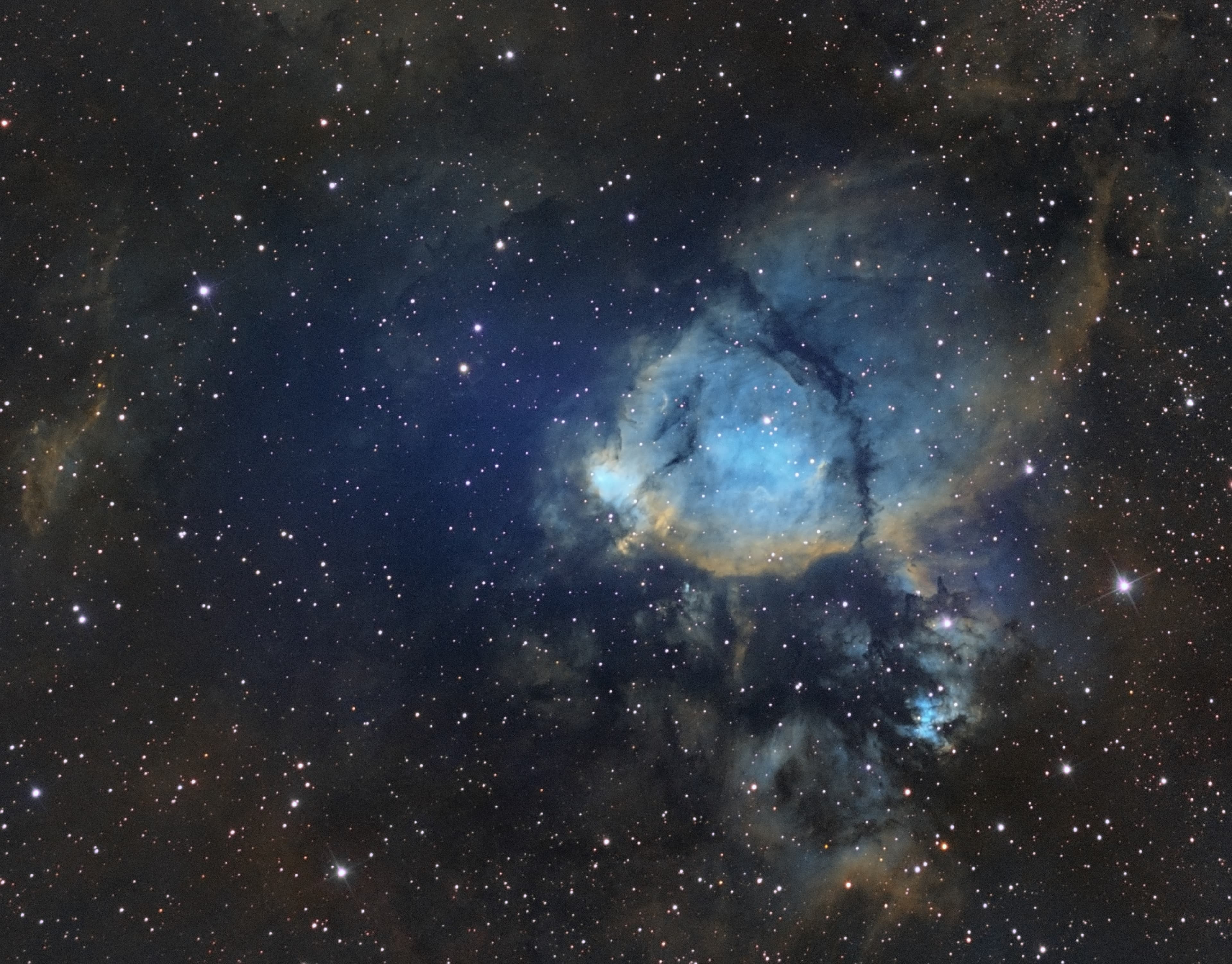
 Shot on 2 Sept 20223 photos
NGC 896
Heart Nebula
- Right ascension
- 2ʰ 25ᵐ 28ˢ
- Declination
- +61° 59′
- Constellation
- Cassiopeia
- Tonight
- Never sets
- yes, circumpolar
- total exposure
- 11 h 50 min
- frames in the FITS archive
- 142
- imaging nights
- 2
- imaging period: 3–4 Sept
- 2020
Visibility and signal
Exposure by filter
- Hα4 h 10 min · 50 frames
- OIII3 h 55 min · 47 frames
- SII3 h 45 min · 45 frames
Share of each filter in the total exposure
- Narrowband filters
- 100%can be shot under the Moon
- Typical frame
- 300 s142 frames in total
- In one night
- 5 h 55 minaveraged over 2 nights
Altitude above the horizon tonight
Observing log2 nights · 142 frames
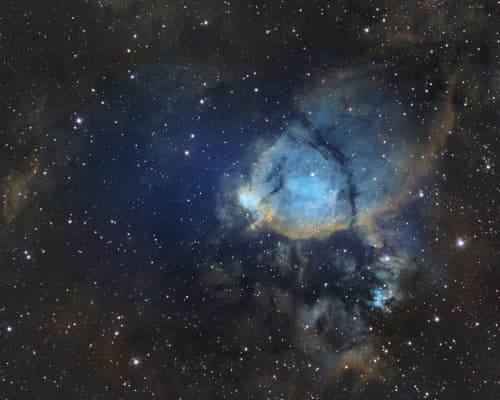
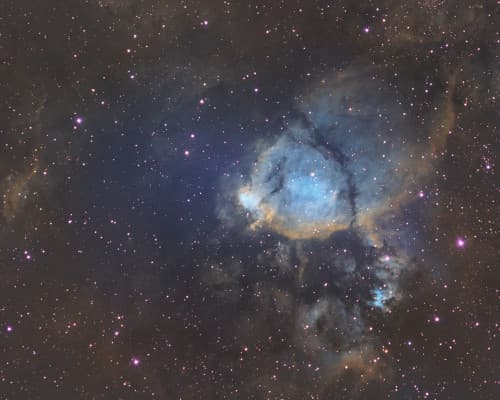
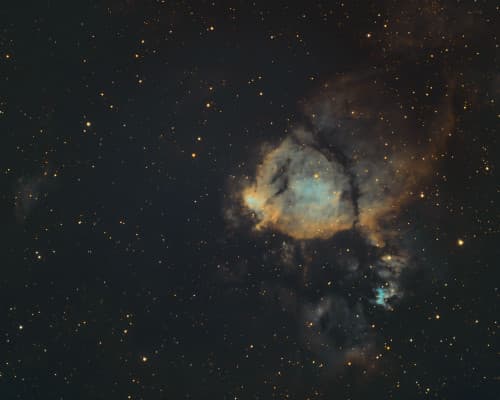
Photos of the objectEach photo is a separate processing; parameters and equipment are on the photo page
About the object
The Heart Nebula (NGC 896) is an emission nebula located 7,500 light-years from Earth in the constellation Cassiopeia. It is located in the Perseus Arm of our Milky Way galaxy.
Structure and Composition
The nebula is composed of plasma and ionized hydrogen with some free electrons, giving it a glowing appearance. A region of active star formation, it also contains dark dust lanes that create a complex texture against its background.
Star Cluster Melotte 15
- At the center of the nebula is a group of stars known as Melotte 15, which emits intense red light. - This cluster contains several bright stars with masses up to 50 times that of the Sun, as well as many faint stars with masses much smaller.
- A microquasar, which is a star with an active accretion disk that produces strong X-rays, has also been discovered within the cluster.
Astronomical Significance
The Heart Nebula is an important object for studying the processes of star formation, as well as for understanding the interactions of gas, dust, and stars in regions of active star formation.
This nebula serves as an example of how stars form in dense clouds of gas and dust, and provides astronomers with key clues about the mechanisms of star formation.