 Shot on 4 Feb 2021
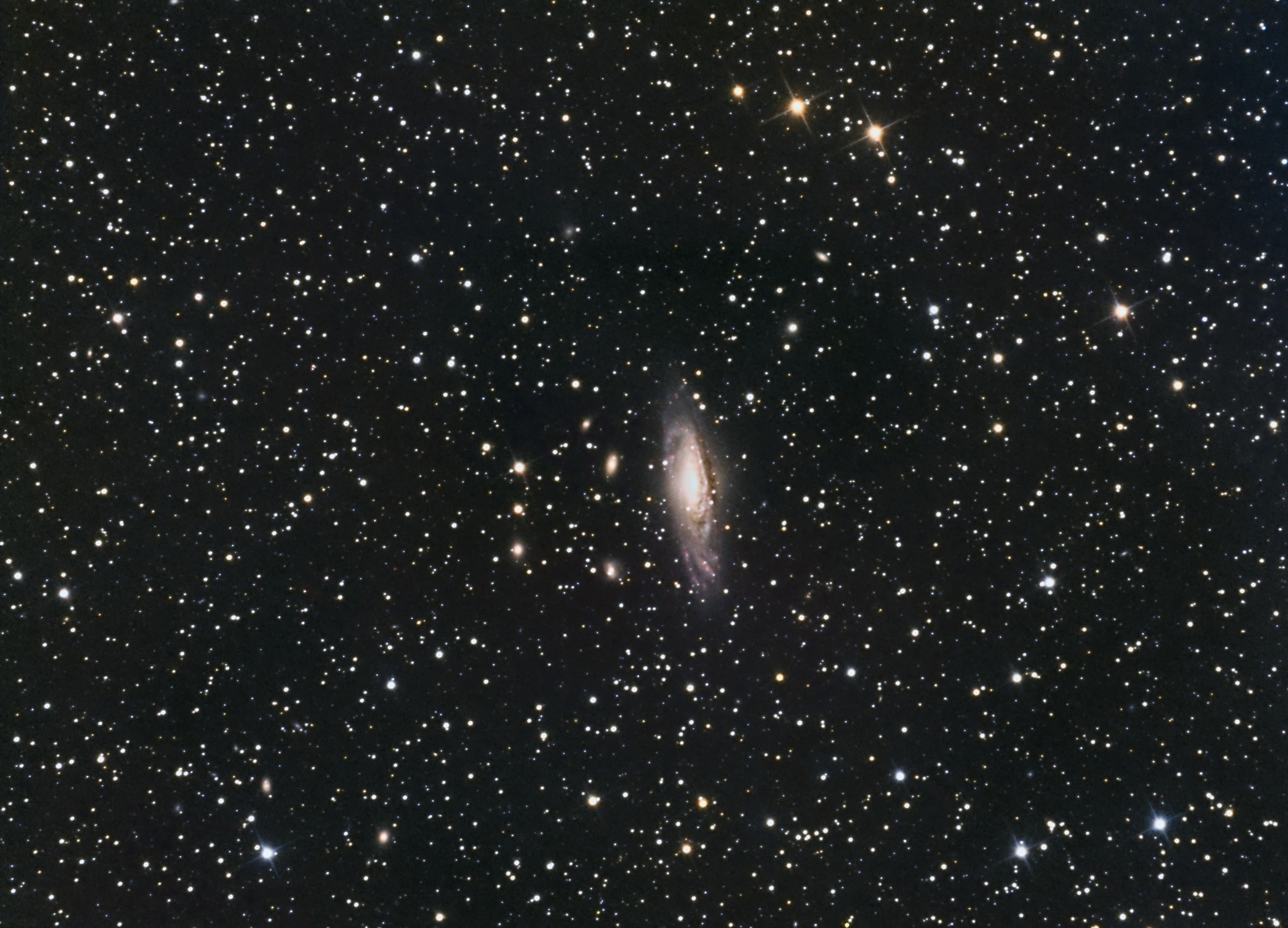
NGC 7331Galaxy NGC 7331
- Right ascension
- 22ʰ 37ᵐ 05ˢ
- Declination
- +34° 26′
- Constellation
- Pegasus
- Type
- Galaxy
- Angular size
- 10 × 4.2′
- Magnitude
- 9.48ᵐ
- Tonight
- Never sets
- no
- total exposure
- 9 h 10 min
- frames in the FITS archive
- 55
- imaging nights
- 4
- imaging period: 23 Sept — 13 Oct
- 2020
Visibility and signal
Exposure by filter
- L3 h · 18 frames
- R1 h 30 min · 9 frames
- G1 h 30 min · 9 frames
- B1 h 20 min · 8 frames
- Hα1 h 50 min · 11 frames
Share of each filter in the total exposure
- Narrowband filters
- 20%needs a dark sky
- Typical frame
- 600 s55 frames in total
- In one night
- 2 h 18 minaveraged over 4 nights
Altitude above the horizon tonight
Observing log4 nights · 55 frames
Photos of the objectEach photo is a separate processing; parameters and equipment are on the photo page

About the object
NGC 7331 is a huge and beautiful spiral galaxy located 50 million light-years from Earth in the northern constellation Pegasus.
Discovery History
NGC 7331 was long considered a spiral nebula, and only later was it recognized as a galaxy that was not included in the famous Charles Messier catalog of the 18th century.
Structure and observations
The galaxy has a tilted disk, which makes it visible from an angle, and thanks to this, long telescopic exposures allow you to get deep images. In photographs, NGC 7331 appears as the main image, surrounded by many other, more distant galaxies.
Stag Group
Galaxies located far beyond NGC 7331 appear ten times smaller than it, due to their distance, which is approximately ten times greater. These galaxies are part of the Deer Group, and their close proximity in the sky is a coincidence.