 Shot on 31 May 20223 photos
IC 434
Horsehead Nebula
- Right ascension
- 5ʰ 43ᵐ 18ˢ
- Declination
- −2° 27′
- Constellation
- Orion
- Type
- HII region
- Tonight
- Never sets
- no
- total exposure
- 5 h
- frames in the FITS archive
- 47
- imaging nights
- 5
- imaging period: 8 Dec — 9 Jan
- 2020–2022
Visibility and signal
Exposure by filter
- L35 min · 7 frames
- R10 min · 2 frames
- G10 min · 2 frames
- B10 min · 2 frames
- Hα3 h 45 min · 33 frames
- OIII10 min · 1 frame
Share of each filter in the total exposure
- Narrowband filters
- 78%can be shot under the Moon
- Typical frame
- 383 s47 frames in total
- In one night
- 1 haveraged over 5 nights
Altitude above the horizon tonight
Observing log5 nights · 47 frames
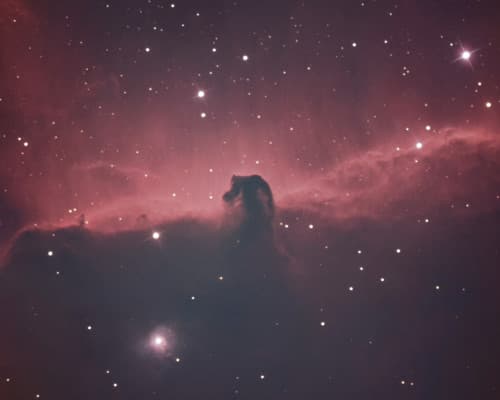
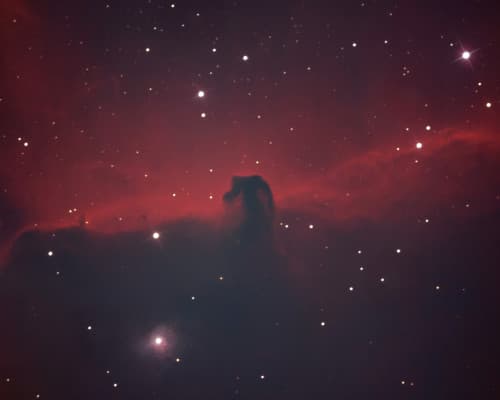
Photos of the objectEach photo is a separate processing; parameters and equipment are on the photo page
About the object
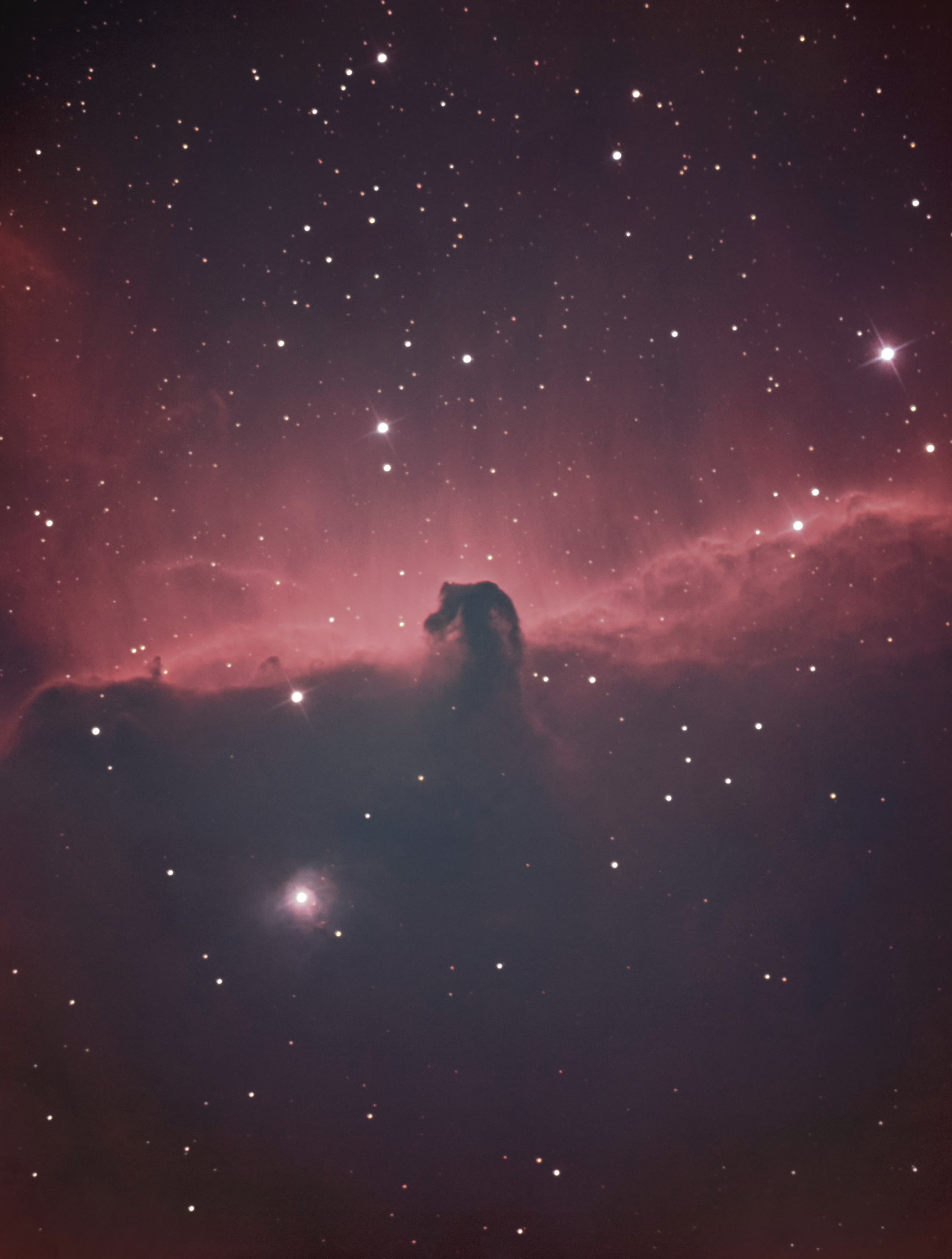
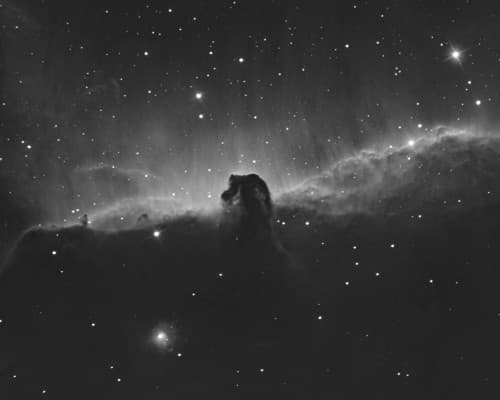
The Horsehead Nebula (IC 434) is a dark nebula located in the constellation Orion. It is part of a larger structure known as the Horsehead Nebula, which is a region of active star formation.
IC 434 is approximately 1,260 light-years from the Sun and occupies a significant portion of a neutral hydrogen shell measuring 2° × 4°. In reality, this corresponds to dimensions of 42 light-years by 85 light-years (13 parsecs × 26 parsecs). This object is an H II region, ionized by ultraviolet radiation from the Sigma Orionis (σ Ori) star system.
The Horsehead Nebula is a dark nebula silhouetted against the glowing gas and dust behind it. Its unique shape resembles the profile of a horse's head, making it an easily recognizable object in astronomy.
One of the significant aspects of studying IC 434 is studying the chemical composition and structure of the gas and dust within the nebula. This data helps astronomers understand the processes of star formation and the evolution of stellar systems. New stars are forming in the vicinity of the nebula, which makes this object especially interesting for scientists.
Using infrared telescopes, astronomers can "penetrate" the dust cloud and study hidden details. This allows them to learn more about star systems that may form in the future, as well as about the processes of gravitational interaction and gas compression.
The Horsehead Nebula is an important object for understanding the mechanisms of star formation and evolution in our Galaxy.